
Blackjack hand signals are the physical gestures players use at the table to communicate decisions to the dealer instead of relying on spoken words alone. Casinos rely on these signals because every hand is recorded by overhead cameras, and a clear gesture leaves no room for disputes about what a player actually asked for.
If you’re new to the felt, learning these signals before you sit down will make your first session far less awkward. This guide walks through the standard gestures for hitting, standing, doubling, splitting, and a few other situations, along with why casinos insist on them and how conventions can vary slightly from one table to the next.
Why Casinos Require Hand Signals
Casinos ask players to use hand signals rather than just saying “hit me” or “I’ll stand” for a simple reason: cameras above every table record the action, but they don’t record audio. If a dispute arises about whether a player asked to hit or stand, the pit boss and surveillance team need a visual record they can review, and a verbal request alone doesn’t leave that trail.
Dealers are also trained to follow gestures first and treat verbal statements as secondary confirmation. This protects both the house and the player. If you say “stand” but tap the table out of habit, a dealer is generally expected to go by the gesture, so it pays to be deliberate and consistent with your hands rather than assuming your words will be the final word.
This system also speeds up play. In a busy casino, a dealer working through multiple hands per shoe benefits from quick, unambiguous gestures rather than parsing sentences from several players at once. Understanding this context helps explain why the signals below are so standardized across most land-based casinos, even though house-specific habits can vary slightly from one property to another.
Before diving into the gestures themselves, it’s worth refreshing the basics of how a hand is built and scored. Our guide to blackjack card values is a good starting point if you want that foundation first.
Hand Signals in Face-Up Games
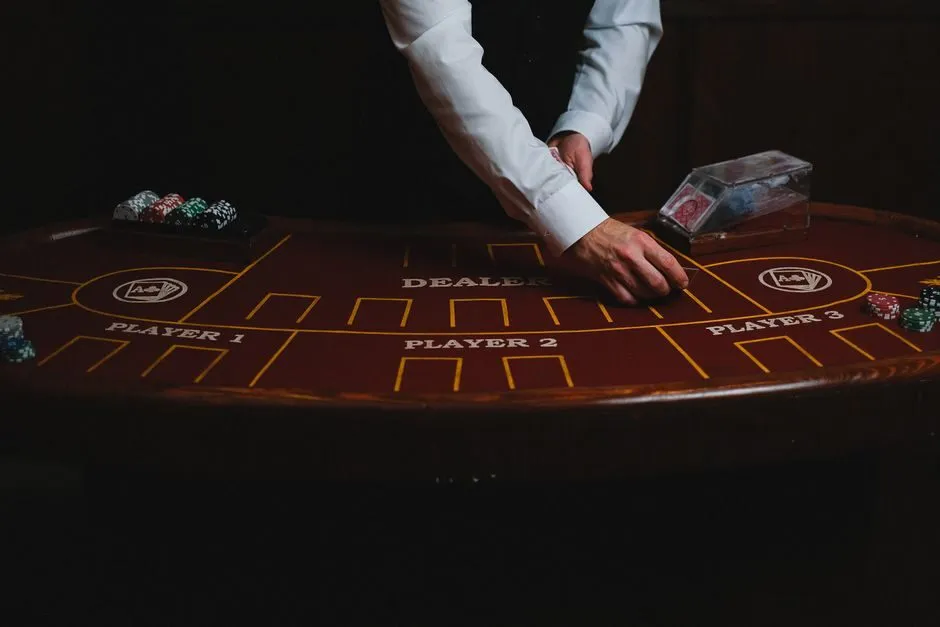
Most blackjack tables today deal cards face-up, meaning players don’t touch their cards at all once they’re dealt. In this format, every decision is communicated entirely through gestures, since the dealer and cameras can already see your hand without you handling the cards.
- Hit: Tap the table felt with one or two fingers, usually right behind your cards. Some players tap repeatedly for each additional card they want.
- Stand: Wave your hand flat, palm down, in a side-to-side motion just above your cards. This signals you’re done taking cards for that hand.
- Double down: Place your additional chips next to your original bet, then point with one finger or lay a single finger beside the bet to indicate you want exactly one more card. For a deeper look at this move, see our full guide on what double down means in blackjack.
- Split: Place a matching bet beside your original wager and form a V shape with two fingers, or simply point between the two cards you want to split.
Because players never touch the cards in a face-up game, this is generally the format where casinos are most attentive to anyone reaching toward the cards unnecessarily — it’s simply not part of the expected routine, so dealers may gently remind you to keep your hands clear and let gestures do the talking instead.
Hand Signals in Face-Down (Pitch) Games
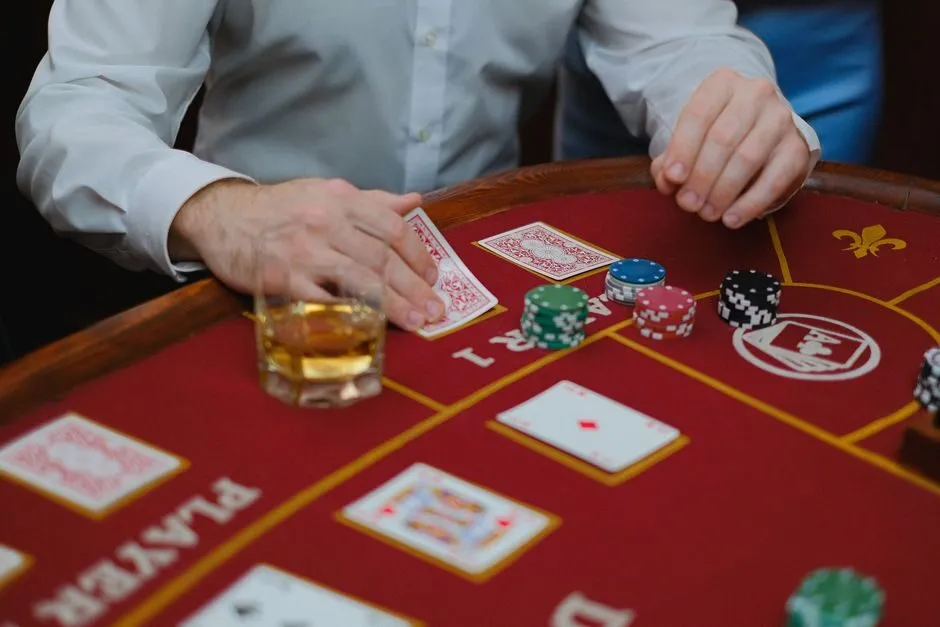
Some casinos still deal a traditional “pitch” game, where two cards are dealt face-down and players are permitted to pick them up with one hand to look at their values. This format has its own conventions, since players are physically holding the cards rather than leaving them on the felt.
- Hit: A common convention is to lightly brush or scratch the cards against the felt toward yourself, though exact habits can vary somewhat by casino, so it’s worth watching the dealer or asking if you’re unsure.
- Stand: Players typically slide the cards face-down under their chip stack, or simply tuck them under the bet to show they’re finished.
- Double down or split: These moves generally require turning your cards face-up so the dealer and cameras can confirm your hand before you add the extra bet, since the dealer needs to see exactly what you’re doubling or splitting on.
If you plan to play pitch games, it’s worth asking the dealer to confirm house conventions before your first hand, since small variations exist. For more foundational vocabulary around hands and values, our blackjack terms glossary covers related phrases you’ll hear at these tables.
Quick Reference Table: Signals by Game Type
| Action | Face-Up Game | Face-Down (Pitch) Game |
|---|---|---|
| Hit | Tap the felt with fingers | Scratch cards toward yourself (convention varies) |
| Stand | Wave hand flat over cards | Slide or tuck cards under chips |
| Double | Point with one finger beside new bet | Typically turn cards face-up, then add bet |
| Split | Two-finger V or point between cards | Typically turn cards face-up, then add matching bet |
Keep in mind that this table reflects common, widely seen conventions rather than a single universal rulebook — individual casinos can train dealers slightly differently, so observing the table or asking the dealer directly is always the safest approach, especially if you’re trying out a new casino or an unfamiliar variant.
Signals for Splitting Aces and Other Special Moves
Splitting aces deserves its own mention because many casinos restrict what you can do afterward — typically allowing only one additional card per split ace and disallowing a second split or a double down on the resulting hands. The gesture itself is the same as a regular split: place a matching bet and point between your two aces, or form the two-finger V.
Because aces are the most valuable starting card in the game, it’s worth understanding their role fully before you’re at the table making split decisions under pressure. Our guide on what an ace is worth in blackjack breaks down how this card functions in different hand totals.
Some tables also use a soft tap-and-point combination when a player wants to double down after splitting, in casinos where that’s permitted. Since these rules vary by house, it’s worth confirming with the dealer or checking posted table rules before assuming a move is available. Reading the felt markings at a table, which usually list payout ratios and rule variations, is a good habit to build alongside learning the gestures themselves.
Common Mistakes Beginners Make With Signals
New players often default to verbal requests out of habit, forgetting that a gesture is expected to accompany or replace the spoken word. This isn’t usually a problem, but it can slow down play and occasionally create confusion if your words and body language don’t match — for example, saying “hit” while your hand drifts toward a stand-like wave.
- Hesitating mid-gesture: Starting a tap and pulling back can look like you’re unsure, prompting the dealer to ask for clarification.
- Touching chips already in play: Once bets are placed and cards dealt, avoid touching your chip stack except to add a double or split bet, since this can be misread or flagged by attentive staff.
- Mixing up table conventions: A player used to face-up games can sometimes awkwardly reach for cards at a face-down table, or vice versa. Spending a hand or two watching before you play at an unfamiliar table helps avoid this.
- Forgetting the matching bet comes first: For both doubles and splits, the convention is to place your additional chips down before or as you gesture, not after.
None of these mistakes are serious, but cleaning them up makes you look more confident and keeps the game moving smoothly for everyone at the table.
How Signals Fit Into Broader Strategy
Knowing the signals is really just the mechanical layer sitting on top of the actual decisions you’re making — when to hit, stand, double, or split based on your hand and the dealer’s upcard. Getting comfortable with the gestures frees up mental space to focus on the strategic side of the game, which matters far more to your long-term results.
If you haven’t yet worked through a structured approach to these decisions, our guide to counting cards in blackjack and our breakdown of blackjack odds are useful next steps once the table mechanics feel natural. Pairing clean, confident signals with a solid grasp of basic strategy is what separates a comfortable regular player from someone who’s still finding their footing at the table.
FAQ
Do I have to use hand signals, or can I just tell the dealer verbally?
You can speak your decision, but dealers are trained to follow the hand signal if your words and gesture don’t match, since surveillance cameras capture video but not always clear audio. It’s best to use both together so there’s no ambiguity.
What happens if I forget the correct signal mid-game?
Dealers deal with new players constantly and will usually guide you if you hesitate or use the wrong gesture. Just watch the dealer or other players at the table for a hand or two if you’re unsure, or ask the dealer directly before the action starts.
Are hand signals the same at every casino?
The core gestures for hit, stand, double, and split are widely recognized, but small conventions can vary by casino or by whether the game is dealt face-up or face-down. When in doubt, observe the table or ask the dealer to confirm before you play.
Why can't I touch my chips after they're in play?
Once betting is closed and cards are dealt, your chip stack is part of the official record for that hand. Touching chips unnecessarily can be misread as an attempt to alter a bet, so it’s best to only handle chips when adding a double or split wager.
Hand signals might seem like a small detail compared to strategy decisions, but they’re the practical foundation that keeps every hand moving smoothly and fairly. Once the gestures become second nature, you can turn your full attention to the decisions that actually affect your results, from basic strategy charts to more advanced techniques covered elsewhere on this site.