
What is the house edge in blackjack, and why do two tables with the same game name feel so different to play? The house edge is simply the built-in mathematical advantage the casino holds over the long run, expressed as a percentage of each bet you make. It doesn’t mean you’ll lose that exact amount every session — short-term results swing wildly in both directions — but over thousands of hands, that small percentage is what keeps the casino profitable while giving skilled players a fair shot at close-to-even sessions.
Understanding the blackjack house edge matters because it’s not fixed. It moves depending on the specific rules at the table, how many decks are in play, and whether you’re using sound decisions or just guessing. This guide breaks down what actually drives the edge up or down, how basic strategy fits into the picture, and what you can realistically expect once you sit down to play.
What the House Edge Actually Means
The house edge is a theoretical, long-run figure. It represents the casino’s expected advantage averaged across an enormous number of hands, not a prediction of what happens in any single session. If you flip a coin ten times, you might get seven heads even though the true odds are 50/50 — blackjack works the same way. A low house edge gives players a better framework for long-term play, but it doesn’t eliminate variance in the short run.
It’s also important to separate the house edge from your personal win rate. Your results depend on betting patterns, bankroll, and luck, while the house edge is a fixed structural number tied to the game’s rules. Two players at the same table can have wildly different outcomes in a single night even though they’re facing the exact same edge.
Because the number is theoretical, it’s most useful as a comparison tool — helping you judge whether one table’s rule set is friendlier than another, or whether a side bet is worth avoiding. For a deeper look at how probabilities play out hand by hand, the blackjack odds explained guide covers the underlying math in more detail.
How Table Rules Change the Edge
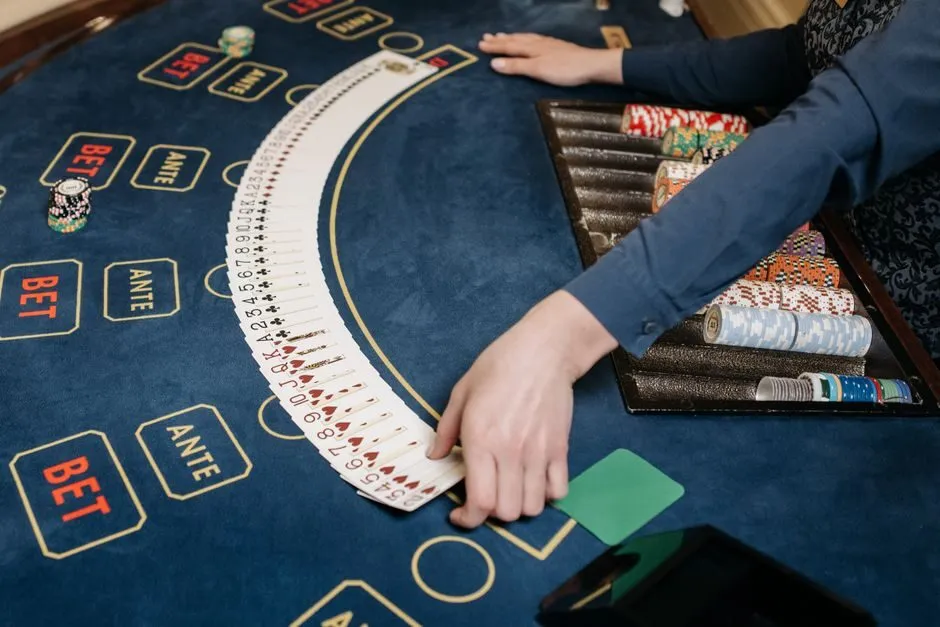
Not all blackjack tables are created equal, even if they look identical from across the casino floor. The specific rule variations at a table push the house edge up or down, sometimes by a meaningful margin. Here are the rules that matter most:
- Blackjack payout: Tables paying 3:2 on a natural are generally better for players than those paying 6:5, which trims your winnings on one of the best hands you can get.
- Dealer stands or hits on soft 17: A dealer who stands on soft 17 is typically more favorable to players than one required to hit.
- Doubling restrictions: Being allowed to double on any two cards gives more flexibility than being limited to specific totals only.
- Surrender availability: Having the option to surrender a bad hand can help reduce losses in situations where the odds are stacked against you.
- Re-splitting and doubling after split: More flexibility here generally works in the player’s favor compared to restrictive tables.
Before sitting down, it’s worth scanning the table felt or asking the dealer about these rules. A table that looks appealing because of a low minimum bet might actually carry a worse edge than a slightly higher-stakes table with friendlier rules.
Number of Decks and Its Effect on the Edge
The number of decks in the shoe is another factor that shifts the house edge, though it rarely acts alone. In general, fewer decks tend to favor the player slightly under otherwise identical rules, because the odds of drawing a natural blackjack or favorable card combinations shift in small but measurable ways. However, this effect only holds when all other rules stay the same — in practice, single-deck and double-deck games are frequently paired with less favorable payouts or stricter doubling rules to offset that advantage.
This is why it’s misleading to assume fewer decks always means a better deal. A single-deck table with a 6:5 payout can actually carry a worse house edge than a six-deck table that pays 3:2 and allows generous doubling and splitting options. The deck count is just one variable among several, and it needs to be evaluated alongside the full rule set rather than in isolation.
If you’re exploring how deck composition affects the odds of specific cards appearing, the blackjack card values guide is a useful companion resource for understanding how each card contributes to the overall math of the game.
Basic Strategy and Why It Narrows the Edge
Basic strategy is a set of predetermined decisions — hit, stand, double, split, or surrender — based on your hand and the dealer’s upcard. It’s derived from probability calculations and tells you the statistically sound play for every possible situation at the table. Playing without it, relying on hunches or superstition, hands the casino a larger advantage than the rules alone would otherwise allow.
Here’s a simplified look at how basic strategy decisions generally break down:
| Situation | Common Basic Strategy Action |
|---|---|
| Hard totals 17 or higher | Stand |
| Hard totals 8 or lower | Hit |
| Pair of Aces or 8s | Split |
| Soft hands against a weak dealer upcard | Double when conditions allow |
| Dealer showing a strong upcard with a weak player hand | Consider surrender if available |
Learning when to double down is one of the most impactful pieces of basic strategy, since misplaying these spots gives up a real opportunity. The what is double down in blackjack guide and the related what does double down mean in blackjack breakdown both walk through this decision in detail.
Side Bets and Why They Carry a Higher Edge
Side bets like Perfect Pairs, 21+3, or insurance are tempting because they offer bigger potential payouts, but they almost always carry a steeper house edge than the main blackjack bet itself. These wagers are priced independently of basic strategy and rely on outcomes — like matching pairs or specific suited combinations — that are statistically rarer and harder to predict.
Insurance deserves special mention since it’s offered so frequently. When the dealer shows an Ace, players are given the option to place an insurance bet against a dealer blackjack. While it feels like a protective move, it’s structurally a separate side wager, and basic strategy generally advises against taking it unless you’re specifically counting cards and tracking the remaining high-value cards in the shoe.
If you’re new to the game and still getting comfortable with core terminology, the blackjack terms glossary is a helpful reference for understanding insurance, side bets, and other wagers you’ll encounter at the table before you start experimenting with them.
Card Counting and Shifting the Edge in Your Favor
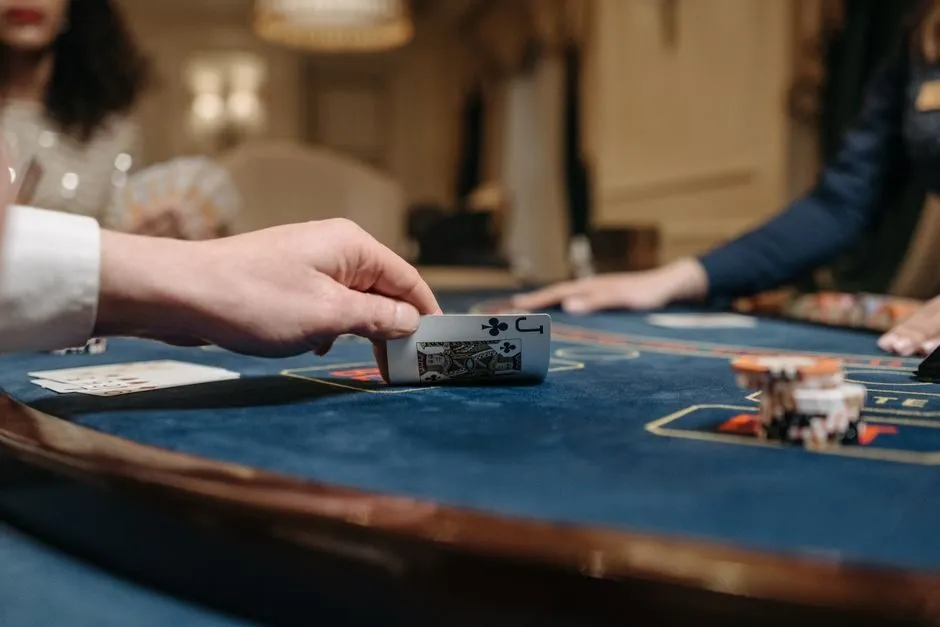
Card counting is a legal technique that tracks the ratio of high to low cards remaining in the shoe. Since high cards favor the player — improving the odds of blackjacks and strong doubling situations — a count that skews high signals a better moment to increase your bet size. This doesn’t guarantee a win on any given hand, but over time it can tilt the long-run math closer to even, or even slightly in the player’s favor under the right conditions.
It’s a skill that takes real practice to execute accurately at table speed, and it only works when paired with correct basic strategy as a foundation. Counting without solid fundamentals underneath it won’t deliver meaningful results.
For players wanting to learn the mechanics properly, how to count cards in blackjack walks through the core system step by step, while counting cards blackjack guide offers a beginner-friendly entry point if you’re just starting to explore the concept.
Common Mistakes That Inflate the Edge Against You
Many players unknowingly hand the casino a bigger advantage simply through habits that feel intuitive but go against sound strategy. Recognizing these patterns is often the fastest way to tighten up your play:
- Taking insurance out of instinct: It feels protective, but mathematically it’s usually a losing proposition for most hands.
- Standing on soft hands too early: Soft totals have more flexibility than players often realize, and standing prematurely can waste good doubling opportunities.
- Splitting pairs that shouldn’t be split: Not every matching pair deserves a split — some combinations are stronger kept together.
- Ignoring the dealer’s upcard: Every decision should factor in what the dealer is showing, not just your own hand total.
- Chasing losses with bigger bets: This doesn’t change the house edge at all — it just increases variance and risk.
Misreading your own hand value is another surprisingly common error, especially with Aces, since they can count as 1 or 11 depending on the rest of your hand. The what is Ace in blackjack guide clears up exactly how that flexibility works and when it matters most for your decisions.
Reading Signals and Etiquette at the Table

Beyond the math, understanding table etiquette and hand signals plays a quiet but real role in how smoothly your decisions get executed. Dealers rely on clear hand signals for hit, stand, split, and double — especially in hand-held games where verbal confirmation alone isn’t enough. Miscommunication at the table can lead to a misplayed hand, which effectively costs you money regardless of what the house edge theoretically allows.
Getting comfortable with these signals also helps you play faster and with more confidence, which matters if you’re tracking a count or trying to stick to a strategy chart under pressure. The blackjack hand signals guide walks through the standard gestures used across most casinos, so there’s no ambiguity when it’s your turn to act.
Table etiquette — like not touching your cards in a shoe game, or keeping chips organized for a double down — isn’t just about manners. It keeps the game moving and reduces the chance of a dealer misreading your intention.
FAQ
What is the house edge in blackjack compared to other casino games?
Blackjack generally offers one of the lower house edges among popular casino table games, particularly when favorable rules are in place and the player uses correct basic strategy. The exact figure varies by table, so it’s best treated as a relative comparison rather than a fixed universal number.
Does the blackjack house edge change based on how I bet?
The house edge itself is tied to the game’s rules and structure, not your bet size. However, betting more aggressively increases variance, meaning your results can swing further from the theoretical average in either direction over a short session.
Can basic strategy alone bring the house edge to zero?
Basic strategy minimizes the house edge as much as mathematically possible for a given rule set, but it typically doesn’t eliminate it entirely. It brings your decisions in line with the statistically optimal play, which narrows the gap significantly compared to guessing.
Is the house edge the same at every blackjack table in a casino?
No. Different tables often have different rule variations — payout ratios, dealer soft 17 rules, doubling restrictions — and each of these shifts the house edge slightly. It’s worth comparing tables before choosing where to play.
The house edge in blackjack isn’t a single fixed number — it’s a shifting figure shaped by table rules, deck count, side bets, and how closely you stick to sound strategy. Understanding these moving parts gives you a clearer picture of what you’re actually up against each time you sit down, rather than relying on assumptions about the game as a whole.
If you’re looking to go deeper into structured strategy training, the winning blackjack strategy training approach offers a step-by-step path for building these skills methodically over time.