
A Perspective From the Casino Side
At a Blackjack Institute seminar, David Miller was introduced to Ms. M, a retired casino professional who had attended from the beginning. Her career had started as a dealer and progressed to casino shift manager. Along the way, she became both a skilled card counter and someone experienced at identifying advantage players.
Ms. M first met Dave when she told him he could no longer play blackjack at her casino. Dave described it as the most polite back-off he had experienced. Although she worked in casino operations, Ms. M said she had always respected card counters. She had never trespassed a counter from casino property or tried to intimidate an advantage player. As an accomplished counter herself, she understood the skill, discipline, and legitimacy involved.
Her question-and-answer session gave attendees a rare chance to hear from someone familiar with the casino side of the table. She discussed casino countermeasures and offered practical advice about blending in as an ordinary gambler. For the author, her knowledge and willingness to speak candidly made the session especially valuable.
Turning Counting Knowledge Into Table Skills
The second practice session required participants to do more than follow basic strategy and maintain a running count. They were instructed to bet according to the true count as well. Miller sat with Gary and Jim, fellow attendees from different parts of the country. Although none considered themselves novices, they shared the goal of strengthening their blackjack play.
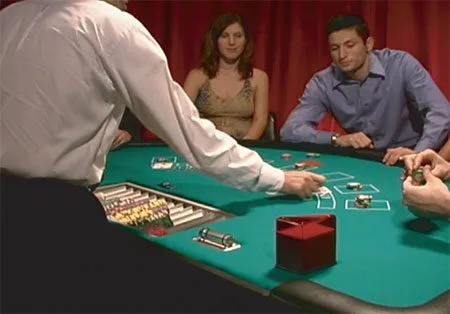
Dave then stepped in as dealer. The drill quickly showed the difference between counting a deck in a controlled setting and keeping up at a fast blackjack table. He dealt at a moderate pace, collected the cards, and asked for the count. The players answered correctly at +3. Then the pace increased. After another rapid round, Dave placed the cards in the discard tray and asked each player for a bet.
For Miller, the speed created pressure. When asked for his bet, he could only answer that he did not know. Dave used the moment to explain the mechanics of true-count conversion and bet calculation. During another 15 minutes of drilling, he explained his thought process for each bet and shared shortcuts for making the calculations. The exercise was intense, but it connected the theory of counting with the fast decisions required in play.
Testing Against the MIT Blackjack Team Standard
The seminar also included a skills competition designed to show how attendees compared with the standard associated with the MIT Blackjack Team. The competition had three stages:
- A ten-question blackjack quiz
- A blackjack tournament
- A speed-counting contest
The winner of each challenge would advance to a final round. Mike would deal to the three finalists, and the last person able to maintain the correct count would win.
The quiz mixed blackjack questions with some entertainment-oriented material. Jim earned the top score. The tournament introduced a different form of blackjack competition. Rather than simply playing against the house, tournament blackjack is player versus player, with money management playing an important role in finishing with the most chips. In the final round, Miller split tens in an attempt to win his table, but the result was not enough. Gary won the tournament.
In the speed-counting contest, Dave burned two cards from each person’s deck. Contestants had to count down the deck accurately and quickly, with the burned cards later revealed to verify the final count. Miller found that nerves affected his performance: when the burn cards were turned over, his count was off by two. Gary ultimately won the final as the only participant who could keep up with Mike’s fast dealing.
A More Complete View of Card Counting
For Miller, the seminar changed his view of card counting. It was not only enjoyable; it brought together knowledge and practical skill. The drills exposed gaps that books and previous table experience had not revealed. Fast dealing, true-count conversion, bet calculation, and the ability to stay composed under pressure all demanded a level of focus and accuracy beyond simply knowing the concepts.
The seminar also provided an authoritative reference point. Seeing Mike and Dave work at speed made clear how high the bar had been set. The experience gave Miller a clearer understanding of what was missing from his own blackjack game and what it would take to improve it.