
Blackjack odds are the foundation of every smart decision you’ll ever make at the table, yet most players never bother to learn what the numbers actually mean. They hear “house edge” tossed around and nod along, but they don’t connect that figure to the choices they’re making hand after hand. Understanding the math behind the game isn’t about turning you into a statistician; it’s about giving you a framework for why certain plays are correct even when your gut tells you otherwise.
In this guide, we’ll break down how odds are calculated, why they shift depending on table rules, and how resources like the Wizard of Odds blackjack tables can help you verify strategy decisions for any rule set you encounter. We’ll also look at how odds connect to broader concepts like basic strategy and card counting, so you leave with a complete picture rather than isolated facts.
What Blackjack Odds Actually Measure
When people say “blackjack odds,” they’re usually talking about one of two things: the probability of a specific event happening (like drawing a ten after hitting a 12) or the overall house edge for a given set of rules. These are related but not the same. Probability tells you the chance of an individual outcome. House edge tells you, over the long run, how much of your money the casino expects to keep on average.
The house edge in blackjack is unusually low compared to other casino games, which is part of why it attracts so much attention from serious players. Under favorable rules and with perfect basic strategy, the edge can shrink to a fraction of a percent. Under unfavorable rules, or with sloppy play, that same game can swing heavily in the casino’s favor.
It’s worth separating two ideas that often get confused: the house edge assuming perfect strategy, and the actual edge a typical player faces. Most recreational players don’t play perfectly, so the realistic edge against them is higher than the theoretical number. This is exactly why learning a solid basic strategy for beginners matters so much — it closes the gap between theoretical and real-world odds.
How Table Rules Change the Odds
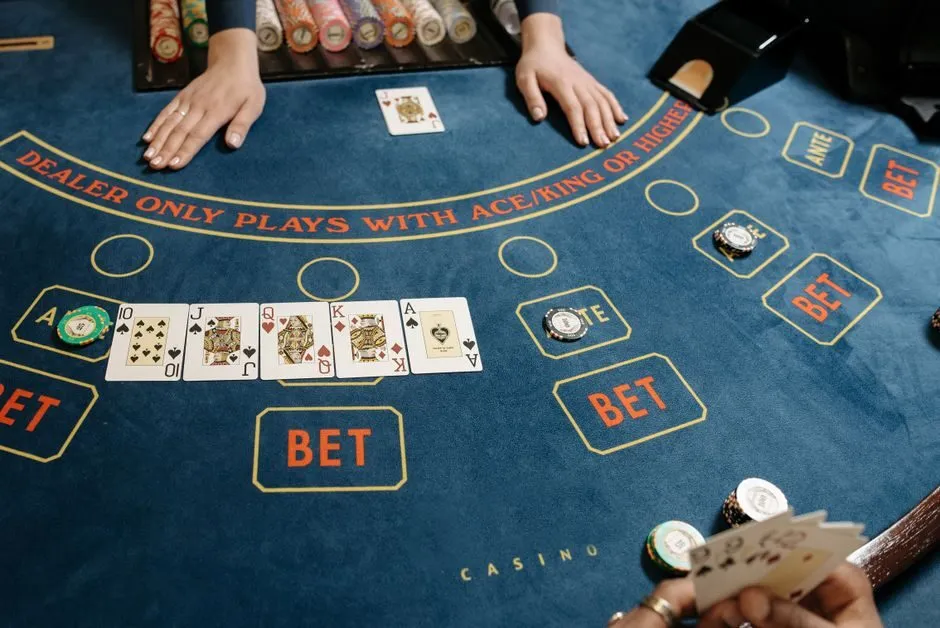
Not all blackjack tables are created equal, and small rule differences can swing the house edge more than people expect. Here are some of the most impactful variables:
- Blackjack payout: A 3:2 payout is standard and fair; a 6:5 payout significantly increases the house edge.
- Number of decks: Single-deck games generally favor the player slightly more than six- or eight-deck shoes, all else equal.
- Dealer hits or stands on soft 17: Dealer standing on soft 17 is better for the player than dealer hitting soft 17.
- Doubling restrictions: Being allowed to double on any two cards is better than being restricted to 9-11 only.
- Surrender options: Late surrender, when available, can shave a small amount off the house edge for players who use it correctly.
- Resplitting and doubling after split: More flexibility here generally benefits the player.
Because these rules vary so much from casino to casino, two tables that look identical on the surface can have meaningfully different odds. This is one reason experienced players scan the table rules before sitting down, rather than assuming every blackjack game is the same.
Using the Wizard of Odds Blackjack Tables
If you want to verify odds for a specific rule combination, the wizard of odds blackjack resources are one of the most referenced tools among serious players. These calculators let you input the exact rules of a game — number of decks, dealer behavior on soft 17, doubling restrictions, and so on — and get back a precise house edge figure along with optimal strategy adjustments.
This matters because basic strategy isn’t a single fixed chart; it shifts slightly depending on the rules in play. A hand that calls for standing under one rule set might call for hitting or doubling under another. Relying on a generic strategy card when the actual table rules differ can quietly cost you more than you realize over time.
The practical takeaway is simple: before committing to a game, especially one with unfamiliar house rules, it’s worth cross-referencing the odds calculator to confirm you’re playing the correct adjusted strategy. Pairing this with a solid grounding in standard strategy — the kind covered in our basic strategy chart — gives you a reliable baseline you can tweak as needed.
Odds vs. Variance: Why Short-Term Results Lie
One of the most misunderstood aspects of blackjack odds is the difference between long-term expectation and short-term variance. The house edge describes what happens over thousands of hands, not what happens in a single session. This means you can play with perfect strategy and still lose money over an evening, or play poorly and walk away a winner. Neither outcome tells you much about whether your decisions were actually correct.
Variance is the natural swing around the expected average, and in blackjack it can be substantial over short sessions. A string of bad luck doesn’t mean the math is wrong, and a lucky streak doesn’t mean a risky play was justified. This distinction trips up a lot of newer players who judge their strategy based on how a single session went rather than whether the decisions matched the correct odds-based play.
Understanding variance helps set realistic expectations. It also explains why disciplined bankroll management matters as much as strategy knowledge — the math works out over the long run, but only if you’re still at the table to see it play out. For a grounded perspective on pacing sessions and setting limits, see our guide on playing with a controlled budget and time limits.
How Basic Strategy Connects to the Odds
Basic strategy exists precisely because of the odds calculations we’ve been discussing. Every decision on a basic strategy chart — hit, stand, double, split, surrender — is the mathematically correct choice based on the probability of outcomes given your hand and the dealer’s upcard. It’s not a guess or a tradition; it’s the product of extensive calculation.
Here’s a simplified look at how strategy logic follows probability:
| Situation | Why the Odds Favor This Play |
|---|---|
| Hitting 16 against dealer 10 | Standing loses more often than hitting, despite bust risk |
| Doubling 11 against dealer 6 | High probability of landing a strong total against a weak dealer card |
| Splitting 8s against almost anything | Two hands starting at 8 beat one hand starting at 16 |
| Standing on 12 against dealer 4 | Dealer bust probability is high enough to outweigh hitting risk |
Following this logic consistently is what separates disciplined players from those who play on instinct. If you’re still building this foundation, our basic strategy charts walk through these decisions in full detail.
How Card Counting Shifts the Odds
Card counting doesn’t change the rules of the game, but it changes your awareness of how the odds are shifting as the shoe depletes. When more high cards remain relative to low cards, the odds tilt slightly toward the player — blackjacks become more frequent, dealer busts increase, and doubling opportunities become more profitable. Counters track this shift and adjust their bets accordingly.
This is a subtle but important distinction: counting doesn’t guarantee winning hands, it identifies moments when the underlying odds are more favorable so you can bet more during those windows and less during unfavorable ones. Over a large enough sample, this edge can turn the long-term math in the player’s favor, though it requires discipline, practice, and accurate tracking.
If this concept interests you, it’s worth exploring systematically rather than piecing it together casually. Our complete guide to counting cards walks through the mechanics step by step, and our Hi-Lo counting explainer breaks down running count and true count in practical terms for beginners.
Common Mistakes That Worsen Your Odds

Even players who understand the basics of blackjack odds often undercut themselves with small, repeated mistakes. Being aware of these can meaningfully improve your results without requiring any advanced technique:
- Playing hunches instead of strategy: Deviating from basic strategy based on a feeling consistently costs money over time.
- Taking insurance without counting: Insurance is a bad bet for players who aren’t tracking the deck composition, despite feeling like a safety net.
- Choosing games with 6:5 blackjack payouts: This single rule change inflates the house edge more than almost any other variation.
- Ignoring surrender opportunities: When available and used correctly, surrender can quietly save money on weak hands.
- Chasing losses with bigger bets: This doesn’t change the odds of the next hand and often leads to faster bankroll depletion.
Most of these mistakes come from treating blackjack as a game of intuition rather than a game of calculated decisions. Reinforcing your fundamentals through structured practice, like the approach outlined in our step-by-step training strategy, is one of the most reliable ways to avoid these pitfalls.
Putting the Odds Into Practice
Knowing the theory behind blackjack odds is only useful if it translates into consistent habits at the table. Start by confirming the rules of any game you sit down to play, since even experienced players can be caught off guard by an unfavorable payout or deck count. From there, commit to following basic strategy without exception, since every deviation chips away at the thin edge the game offers.
If you want to go further, structured learning environments can accelerate the process significantly compared to self-study alone. Guided practice, feedback on your decisions, and realistic table simulations help cement strategy in a way that reading alone often doesn’t. For players serious about tightening their game, resources like card counting and table training seminars or private mentoring offer a more hands-on path to internalizing these odds-based decisions.
FAQ
What are typical blackjack odds compared to other casino games?
Blackjack generally offers a lower house edge than most other table games, especially when played with favorable rules and correct basic strategy. The exact edge depends heavily on specific table rules like payout ratio and deck count.
Is the Wizard of Odds blackjack calculator accurate for any casino?
It’s accurate for the specific rule set you enter. Since blackjack rules vary by casino and even by table, you need to input the exact rules in play to get a reliable house edge figure for that particular game.
Does basic strategy guarantee I'll win?
No. Basic strategy minimizes the house edge and gives you the best possible odds on each hand, but variance means short-term results can still go either way. It’s a long-term approach, not a guarantee for any single session.
Do blackjack odds change based on how many decks are used?
Yes. Generally, fewer decks slightly favor the player, while more decks slightly favor the house, assuming other rules stay the same. This is one of several factors that combine to determine the overall house edge.
Blackjack odds aren’t abstract trivia — they’re the practical backbone of every decision you make at the table, from whether to hit a 16 to whether a table’s rules are even worth sitting down for. The more comfortable you become with how these numbers work, the less you’ll rely on guesswork and the more consistent your long-term results are likely to be.
If you’re ready to turn this understanding into real skill, explore our deeper guides on strategy and counting, or consider structured training through our seminars and mentoring programs to practice these concepts in a realistic setting.